


Facilitating collaboration: How CoM SSA connects cities for climate solutions
Published: 11 Mar 2025
Access to Energy
Adaptation
Events
General
Mitigation
Success Stories

Collaboration is at the heart of effective climate action. Across sub-Saharan Africa, cities face shared climate risks such as extreme weather events, rising temperatures, and resource scarcity. Addressing these challenges in isolation is neither efficient nor sustainable. Recognising this, the Covenant of Mayors in Sub-Saharan Africa (CoM SSA) has championed over 25 city-to-city exchanges, fostering peer learning, strengthening capacities, and empowering local governments to implement impactful climate solutions. As the regional covenant to the Global Covenant of Mayors (GCoM) for Climate and Energy, CoM SSA connects signatories with global peers, paving the way for regional and international city-to-city peer learning opportunities.
Strengthening sister-city partnerships
At the inaugural Africa Urban Forum in 2024, members of the CoM SSA Regional Mayors Forum (RMF) took a bold step by formalising sister-city relations through Memorandums of Understanding (MoUs). These long-term partnerships enable cities to share experiences, successes, and challenges, fostering collective problem solving. A testament to this commitment, the Mayor of Dire Dawa (Ethiopia) hosted fellow CoM SSA RMF members for site visits and exchanges ahead of the Forum. This engagement deepened mutual understanding and provided firsthand insights into sustainable urban solutions, reinforcing the value of peer learning. in addressing shared urban challenges.

African cities on the global stage

CoM SSA delegates, together with other Global Covenant of Mayors (GCoM) regional covenants participated in matchmaking opportunities and exchanges on innovative solutions to support climate change mitigation, adaptation, and energy access. These engagements highlighted the role of African cities in shaping global climate resilience strategies, particularly for coastal and port cities facing acute adaptation challenges. See below some of the stand-out moments for CoM SSA signatories that attended the Congress.
“It’s exciting to see a lot of solutions that could help our cities become better cities, interacting with a lot of people working on the kind of solutions that we're looking for ranging from nature-based solutions to data-driven solutions.” ~ Basil Angaga, Chief Sustainability Officer for the County Government of Mombasa (Kenya)

“For me, the key takeaway is recognising the similarities between my municipality and other cities in Africa and some countries around the world. Engaging in serious conversations about shared challenges and solutions has been invaluable.” ~ Lunga Mhlongo, Chief Town Planner, KwaDukuza Municipality (South Africa)
"Sharing knowledge and learning from other cities is invaluable—it's exciting to see what's happening elsewhere and rewarding to connect with the right people, all in one place. This has been a truly resourceful experience, and I’m very grateful." ~ John-Charuk Siafi, Mayor of Monrovia (Liberia)
“Attending this conference has allowed us to network and form partnerships with organisations and cities across sub-Saharan Africa facing similar challenges. By collaborating, we can build a shared foundation for solutions that CoM SSA can support. For instance, my city [Sekondi-Takoradi] and Monrovia have similar issues, like waste management and urban planning, that require action beyond the city level, and through peer learning, we can scale pilot projects and drive progress together.” ~ Kofia Boa, Sekondi Takoradi Metropolitan Assembly (Ghana).
Knowledge sharing in action
CoM SSA city-to-city exchanges take various forms, from high-level forums to hands-on workshops. In October 2024, a workshop in The Gambia features Ms. Grace Wanjiru Karanja from Nakuru County (Kenya) sharing insights on integrating climate priorities into governance. By detailing Nakuru’s journey in developing a Sustainable Energy Access and Climate Action Plan (SEACAP), she provided valuable guidance for Gambian municipalities working toward climate resilience.
Read more about other CoM SSA city-to-city exchanges:
Waste management lessons
A notable city exchange took place in May 2024 when the Abuja Urban Lab delegation visited Lagos State to study its waste management strategies. Lagos, a coastal megacity generating 13,000 to 15,000 metric tonnes of waste daily, has pioneered waste governance models through policy reforms, public-private partnerships, and technology-driven solutions.
During the visit, the Abuja delegation engaged with key institutions, including the Lagos State Waste Management Authority, Lagos State Environmental Protection Agency, and the Waste Pickers Association of Nigeria. Inspired by Lagos’s success, Abuja is now developing its own inclusive and efficient waste management policies—ensuring that best practices are shared and adapted across cities.
Similarly, in Kenya, CoM SSA facilitated a waste management city-to-city exchange between Embu County and Nakuru County. This exchange was to share knowledge and best practices on solid waste management between the counties to accelerate the implementation of climate-resilient waste management practices. The exchange emphasized the importance of inter-county cooperation in strengthening institutional and human capacities to accelerate the fight against climate change and to improve livelihoods.

Building a collective future
The partnerships and knowledge-sharing initiatives facilitated by CoM SSA demonstrate that African cities do not need to work in isolation or reinvent the wheel to drive climate action. By learning from one another, cities accelerate the implementation of innovative, locally relevant solutions. As these collaborations deepen, so does the continent’s resilience—ensuring that climate action is holistic, inclusive, and impactful. CoM SSA remains committed to championing these connections, fostering a future where African cities collectively lead the way in sustainable urban development.
 Share On Facebook
  Share On X
  Send Via Email
 Related Articles
-
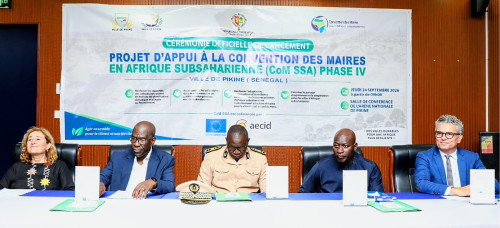
Strengthening climate change adaptation, mitigation, and resilience in urban areas of sub-Saharan Africa
AECID brings together five local authorities in the Dakar region to tackle climate change, led by the mayors of Pikine and Dakar, key partners of Spanish Cooperation.
View articles -

Implementing a climate action plan: lessons and inspiring examples from African cities
All CoM SSA signatories commit to developing a Sustainable Energy Access and Climate Action Plan (SEACAP). But a climate action plan only delivers impact when its priorities are reflected in budgets, institutions, projects and investments. A SEACAP is therefore not the end of the journey: it provides the evidence base and strategic direction for implementation.
View articles -
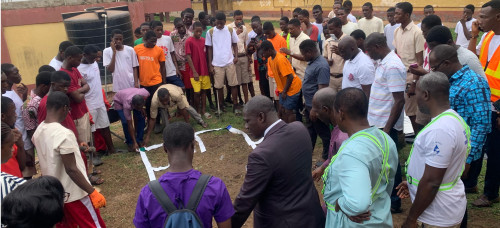
Bringing biogas to Ghanaian schools
In partnership with Oekobit, the Covenant of Mayors in Sub-Saharan Africa co-implementing partner GIZ, and the Sekondi-Takoradi Metropolitan Assembly (STMA), Ghana, is implementing school-based waste separation and biogas systems that reduce waste while generating renewable energy.
View articles