


Renewable energy as a vehicle for equity and urban resilience in sub-Saharan Africa
Published: 13 Jul 2026
Access to Energy
Events
General
Success Stories

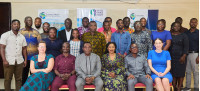
As cities across sub-Saharan Africa continue to grow, so too does the urgency to ensure that urban development is powered by energy systems that are reliable, affordable and equitable. This was the central message emerging from the recent Regional Dialogue on Renewable Energy, co-hosted by the Covenant of Mayors in Sub-Saharan Africa (CoM SSA) Secretariat, Global Covenant of Mayors for Climate & Energy (GCoM) and REN21.
The dialogue formed part of GCoM’s global online series highlighting the role of subnational governments in accelerating the transition to renewable energy. Moving beyond high-level commitments, participants explored what renewable energy implementation looks like in practice—from rapidly growing megacities to secondary towns facing rising populations and limited infrastructure. Bringing together local leaders and technical experts, the discussion focused on how renewable energy can strengthen urban resilience while improving people's everyday lives.
Powering resilient urban futures
A key message throughout the dialogue was that renewable energy is far more than a climate solution. As REN21 Energy Champion Dr Seleshi Bekele noted, energy underpins every aspect of development—from water security and healthcare to education, digital connectivity and economic opportunity. Without it, cities cannot build the resilient communities needed to withstand growing climate and urbanisation pressures.
Participants also acknowledged the significant challenges facing many African cities, including unreliable electricity supply, ageing infrastructure, rapid urban growth and unequal access to energy. Addressing these challenges will require greater investment, stronger partnerships and better support for local governments. For Mayor Kenalemang Phukuntsi (Tswelopele Local Municipality, South Africa), local governments are on the frontline of delivering essential services and understand the daily realities of the communities they serve. Across the continent, cities are already taking practical action by introducing LED street lighting, smart metering and other measures that improve energy efficiency, reduce losses and strengthen municipal service delivery. These examples demonstrate that local governments are not waiting for the transition to happen; they are actively driving it.
CoM SSA Regional Mayors Forum member, Mayor Manuel de Araújo (Quelimane, Mozambique), emphasised that cities must be recognised as full partners in the renewable energy transition. While national governments set policy and regulatory frameworks, municipalities turn these ambitions into tangible improvements for residents. Achieving this requires stronger collaboration across all levels of government, improved access to finance and greater investment in local capacity to plan and implement renewable energy projects.
Putting equity at the centre of the energy transition
Equity remained central to the discussion. Success should not be measured solely by the amount of renewable energy installed, but by its ability to improve people’s lives, leaving no one behind. Distributed renewable energy solutions (including rooftop solar, mini-grids and battery storage) offer significant opportunities to expand access to reliable energy for informal settlements, healthcare facilities, schools and underserved communities, while supporting local economic development.
The discussion also highlighted the importance of better data, stronger planning and closer collaboration. As Felix Odhiambo (Kisumu County, Kenya) noted, robust local data enables cities to make informed investment decisions, prioritise infrastructure needs and monitor progress over time. Combined with partnerships between governments, development partners, the private sector and communities, data-driven planning can accelerate renewable energy deployment where it is needed most.
African cities are shaping the future of renewable energy
The dialogue closed with a shared vision: African cities are not simply beneficiaries of the energy transition - they are essential drivers of it. Initiatives like CoM SSA, REN21 and GCoM are already contributing to this shift, providing the knowledge, capacity strengthening, networking and strategies that support local governments in taking effective action. As urbanisation accelerates, empowering local governments to plan, finance and implement renewable energy solutions will be critical to building healthier, more resilient and more equitable cities across the continent.
 Share On Facebook
  Share On X
  Send Via Email
 Related Articles
-
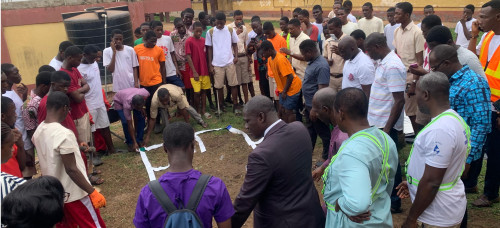
Bringing biogas to Ghanaian schools
In partnership with Oekobit, the Covenant of Mayors in Sub-Saharan Africa co-implementing partner GIZ, and the Sekondi-Takoradi Metropolitan Assembly (STMA), Ghana, is implementing school-based waste separation and biogas systems that reduce waste while generating renewable energy.
View articles -
African cities are stepping up as climate leaders, and the data proves it.
In 2025, CoM SSA signatories were awarded over 100 badges for reporting on their climate action and sustainable energy progress.
View articles -

Advancing access to finance for urban infrastructure in Africa
Positioning GIZ CoM SSA within Global Gateway at the EU Regional Business Forum in Abidjan
The EU Regional Business Forum held from 30 March to 1 April 2026 in Abidjan, Côte d’Ivoire, brought together finance institutions, European investors, and public sector stakeholders, strengthening connections between the EU Global Gateway investment agenda and African government priorities, with African governments as partners and co-creators. GIZ, under the CIVIC Platform - Climate Resilient Infrastructure Investment in Cities, is one of the implementation partners of the Covenant of Mayors in Sub-Saharan Africa (CoM SSA), and joined the forum to showcase how locally grounded urban priorities can connect to the EU’s policy and investment mobilisation agenda.
View articles